Incarne Home

Category

Body & Identity

21 articles

Two Bodies, One Person: The Physical Price of Living in Different Registers

Two Bodies, One Person: The Physical Price of Living in Different Registers

Most Americans don't just code-switch their language — they code-switch their entire physical selves. The way you hold your jaw at work, soften your gait at home, or square your shoulders for a Zoom call are all separate performances running on the same exhausted frame. What happens to a body that's always mid-costume change?

Before You Know You Want It: The Body's Secret Language of Longing

Before You Know You Want It: The Body's Secret Language of Longing

Desire doesn't start in the mind. It starts somewhere in the chest, or the throat, or the particular way your hands go still when someone walks into a room. The body has been keeping score of what you want long before you're willing to admit it. Here's what that score actually looks like.

Shoulders Up: What Collective Tension Carved Into the American Body

Shoulders Up: What Collective Tension Carved Into the American Body

Somewhere between the news cycle and the commute, American shoulders crept toward American ears — and never quite came back down. Physical therapists, somatic coaches, and movement practitioners are watching this pattern play out in real time, and what they're seeing isn't just bad posture. It's a national story written in muscle.

When the Body Breaks Open: What Grief Does to an American Frame

When the Body Breaks Open: What Grief Does to an American Frame

Grief doesn't just live in your chest — it rewrites your entire posture. From the cave of a hunched back to the heaviness that makes your limbs feel borrowed, loss has a physical language we rarely let ourselves speak out loud. Here's what happens when we finally do.

Before Your Mind Catches Up, Your Spine Already Knows

Before Your Mind Catches Up, Your Spine Already Knows

Grief doesn't wait for your brain to process it. Long before you find the words, your shoulders are already caving, your throat is already closing, and your body is writing a story your conscious mind hasn't caught up to yet. Learning to read that language might be the first real step toward coming back to yourself.

You Can't Fake the Flinch: What Your Reflexes Reveal When Your Persona Steps Out

You Can't Fake the Flinch: What Your Reflexes Reveal When Your Persona Steps Out

Before your brain finishes drafting its response, your body has already answered. In a culture obsessed with curated self-presentation, involuntary micro-reactions are the last honest thing about us. Learning to read them — in yourself and others — might be the most radical form of self-knowledge left.

Before You Can Lie, Your Body Already Told the Truth

Before You Can Lie, Your Body Already Told the Truth

That split-second flinch, the breath you swallowed mid-sentence, the eyes that darted away before you could stop them — your body has already answered the question your mouth is still deciding how to spin. Neuroscience is catching up to what performers and therapists have known for years: involuntary physical responses are the most honest language we have. And learning to read them might change everything about how we understand each other.

Just Sit There: What Happens to Your Body When You Stop Running From the Wait

Just Sit There: What Happens to Your Body When You Stop Running From the Wait

We've engineered the discomfort of waiting almost entirely out of our lives—and something important left with it. From airport terminals to doctor's office chairs, Americans are starting to ask what their bodies are actually trying to say in those in-between moments. Turns out, the waiting room might be the most honest place left.

No Mic Needed: How Performers Without Voices Are Owning the Stage

No Mic Needed: How Performers Without Voices Are Owning the Stage

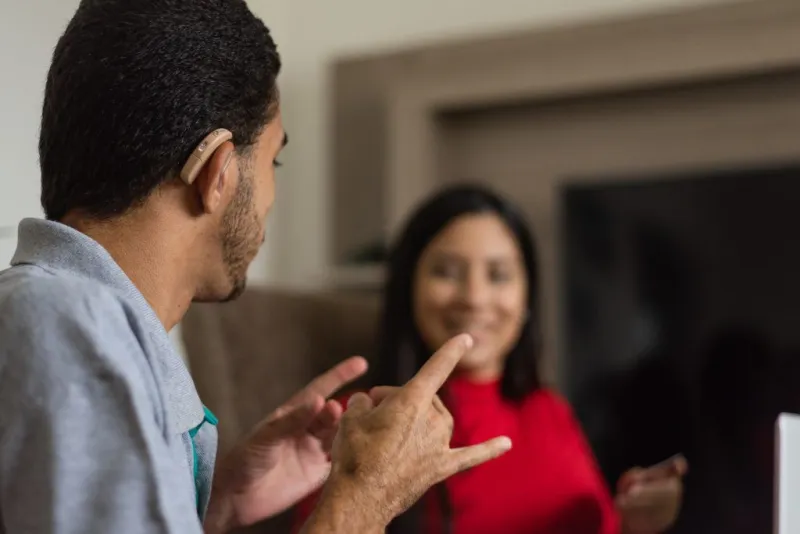
From ASL concert interpreters who've become headliners in their own right to nonverbal autistic creators commanding millions of followers through gesture alone, a new generation of performers is proving that presence doesn't require speech. The body, it turns out, has always been the loudest instrument in the room. These artists aren't adapting to the stage — they're rewriting what the stage is for.

Fall on Purpose: The Performers Making Clumsiness Into an Art Form

A growing wave of performance artists, TikTok creators, and choreographers are deliberately moving badly — and the crowds are showing up for it. This isn't incompetence. It's a full-throated rejection of the polished, perfected body as the standard of worthiness. Awkward is in, and it has something real to say.

Let It Show: The Case for Letting Your Body React Without Permission

Let It Show: The Case for Letting Your Body React Without Permission

We've spent decades training ourselves to suppress the body's most honest signals—the trembling voice, the sudden tears, the flush of red crawling up the neck. But a growing wave of performers, athletes, and regular people are pushing back, arguing that the flinch, the sweat, the uncontrollable sob might be the most truthful thing a body ever does. What have we lost by trying to look so damn composed?

Paint, Padding, and Power: How Drag Took Over the American Stage

Drag has exploded from smoky underground bars into primetime television and suburban theaters — and the transformation says everything about how Americans are rethinking what bodies are allowed to be. We talked to working queens and kings about what it really means to wear yourself as art. The stage, it turns out, was always political.

Marked and Moving: How Dancers Are Turning Injury Into Choreography

After injury strips a dancer of what they thought defined them, some are finding that the body that emerges on the other side has something more honest to say. A new wave of performers is building work directly from their wounds — and audiences are leaning in.

Written in Skin: The Stories Our Scars Tell the World

Scars are the body's most honest autobiography — unfiltered, permanent, and entirely yours. From surgical lines to accident marks and intentional modification, people across the US are reclaiming their physical histories as acts of radical self-authorship. Here's what happens when 'imperfection' becomes the whole point.